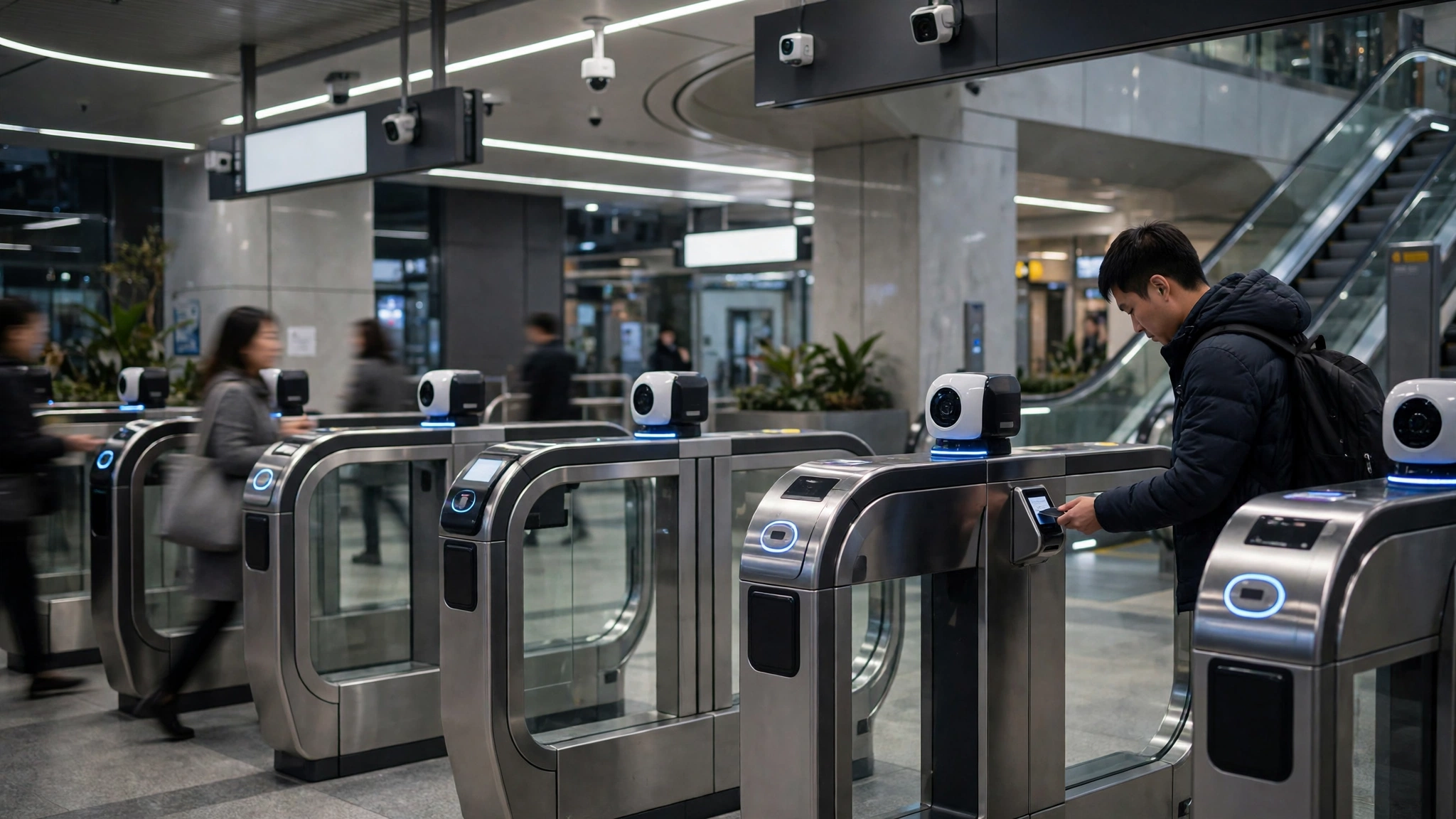
Account-based ticketing is quietly changing the way millions of people pay for buses, trains, and trams. For decades, riders had to buy paper tickets, load cash onto plastic cards, or stand in line at a vending machine that only worked half the time. Today, a rider can tap a bank card, a phone, or a smartwatch at a validator and simply walk on. The fare is worked out later, in the cloud, and the system makes sure nobody pays more than they should.
What makes this shift so interesting is that account-based ticketing doesn’t work alone. It sits at the center of a bigger technology stack. Internet of Things (IoT) devices such as smart validators, onboard sensors, and connected fare gates collect data in real time. Artificial intelligence (AI) then reads that data to spot fraud, forecast demand, and help agencies set fairer prices. Together, these three pieces form what many in the industry now call next-generation fare collection.
For transit agencies, the payoff is lower cash handling costs, cleaner data, and faster boarding. For riders, it means fewer apps, fewer cards, and automatic fare capping that protects their wallet.
In this guide, we’ll break down how account-based ticketing works, where AI and IoT fit in, what real cities are doing right now, and what challenges agencies still face. Whether you run a transit system, build mobility software, or just want to understand why your morning commute suddenly got easier, this article covers the full picture.
What Is Account-Based Ticketing and Why Does It Matter?
At its core, account-based ticketing (often shortened to ABT) moves the “brain” of the fare system from the card to the back office. In older systems, your smartcard stored your balance and your ticket. The validator had to read that card, check the value, deduct the fare, and write the new balance back onto the chip. All of that happened in a fraction of a second, right at the door of the bus.
With account-based ticketing, the card or phone becomes a simple token. It’s just an identifier. When you tap, the validator records the tap and sends it to a central server. The server knows who you are, what fare products you hold, what discounts apply to you, and how much you’ve already spent today. It then calculates the correct fare and charges you.
Card-Based vs. Account-Based Ticketing
Here is a quick comparison to make the difference clear:


- Where the value lives: Card-based systems store value on the card. Account-based ticketing stores value and rules in a secure cloud account.
- What happens if you lose your card: With card-based systems, the balance is often gone. With an account, you block the old token and move your balance to a new one.
- How fares change: Changing fares in a card-based system can mean updating every validator in the network. In an account-based ticketing system, the agency updates the rules once in the back office.
- Payment options: Card-based systems usually accept one proprietary card. ABT can accept smartcards, QR codes, mobile wallets, and contactless bank cards at the same time.
Consulting firm L.E.K. describes account-based ticketing as the new standard back office for automated fare collection (AFC), which explains why so many agencies are retiring their legacy smartcard systems.
Why Transit Agencies Are Making the Switch
Agencies aren’t moving to account-based ticketing just because it’s modern. They’re moving because it saves money and solves real problems. Cash collection is expensive. Proprietary hardware is costly to maintain. And riders increasingly expect to pay for transit the same way they pay for coffee. ABT answers all three issues with one platform.
How IoT Powers Smart Fare Collection
If account-based ticketing is the brain, IoT is the nervous system. Every tap, every passenger count, and every vehicle location comes from connected devices spread across a transit network. Without those devices, the back office would have nothing to work with.
Smart Validators and Connected Fare Gates
Modern validators are small computers. They read NFC chips, scan QR codes, connect over 4G or 5G, and sync with the cloud. In an account-based ticketing setup, the validator doesn’t need to make complex fare decisions. It just needs to capture the tap quickly and securely, then pass it along.
Because the validator is lighter on logic, agencies can buy cheaper hardware and update software remotely. Many validators now support:
- Contactless EMV bank cards and mobile wallets like Apple Pay and Google Pay
- QR code and barcode scanning for app-based tickets
- Closed-loop smartcards for riders without bank accounts
- Offline mode, so taps are stored and uploaded when the connection returns
Onboard Sensors and Automatic Passenger Counting
IoT goes well beyond the payment point. Automatic passenger counters (APCs) use infrared or 3D cameras at doors to count people getting on and off. GPS units track vehicle positions every few seconds. Temperature, door, and engine sensors report the health of the vehicle.
When this sensor data is combined with tap data from account-based ticketing, agencies get a much clearer view of ridership. They can see who paid, how many people actually boarded, and where fare evasion is most common.
Edge Computing on Buses and Trains
Not every decision can wait for the cloud. A bus driving through a tunnel or a rural area may lose its connection. Edge computing lets the onboard device handle basic checks locally, such as verifying that a token isn’t on a deny list. When connectivity returns, the data syncs with the central account-based ticketing platform. This hybrid approach keeps boarding fast while keeping the back office in charge.
How AI Is Transforming Account-Based Ticketing
Once all that IoT data lands in the back office, AI takes over. Machine learning in transit turns millions of daily taps into useful decisions, and the industry is paying close attention. At the 2026 APTA Tech Conference, fare collection came up again and again, with several sessions focused on the move toward account-based ticketing and interoperable fare systems. Speakers also showed how agencies are using AI to analyze data gathered from vehicles and infrastructure.
AI-Powered Fraud Detection
Fraud is a constant headache in fare collection. Stolen cards, cloned tokens, and shared QR codes all cost agencies money. AI models can learn what normal travel looks like for each account and flag strange patterns. For example:
- The same token tapping in two cities within ten minutes
- A sudden spike in taps from a card that’s usually used once a day
- Screenshots of the same QR ticket being scanned on multiple buses
Because account-based ticketing keeps every transaction in one central system, AI has a complete history to analyze. That’s much harder to do when value is scattered across millions of offline cards.
Demand Forecasting and Smarter Service Planning
AI can predict how many people will ride a route at a given hour, on a given day, in given weather. With account-based ticketing data feeding the models, planners use these forecasts to adjust frequency, add vehicles during peak demand, or trim service where buses run empty. The tap data from account-based ticketing is a goldmine here, because it shows real trips rather than rough survey estimates.
Dynamic and Personalized Fares
Some agencies running account-based ticketing are testing AI-driven dynamic pricing, such as off-peak discounts that nudge riders away from crowded rush hours. Others use AI to recommend the best fare product for each rider. If someone keeps paying single fares but rides every weekday, the system can suggest a weekly pass or simply cap their spending automatically.
This kind of work is already moving into pilots. Ticketing provider Kentkart and AI firm Sherpa.ai have teamed up to test how artificial intelligence can support fare management on Kentkart’s account-based ticketing platform, with the first pilots planned in Spain.
Predictive Maintenance for Fare Equipment
A broken validator is lost revenue. IoT sensors report error codes, temperature, and usage. AI reads those signals and predicts which devices are likely to fail next week. Maintenance crews can then fix problems before riders notice. In a large account-based ticketing network with thousands of validators, that’s a big operational win.
7 Ways AI, IoT, and Account-Based Ticketing Work Together
Here’s how the three technologies combine in practice. Think of these as the seven biggest changes riders and agencies are seeing right now.
- Tap-and-go boarding. IoT validators capture taps in milliseconds, and account-based ticketing handles the fare math in the cloud. Boarding gets faster, and dwell times at stops drop.
- Automatic fare capping. The account-based ticketing back office tracks daily, weekly, or monthly spending and stops charging once a rider hits the cap. No upfront pass needed.
- Real-time fraud alerts. AI scans the stream of account-based ticketing taps and flags suspicious tokens within minutes, not weeks.
- Multimodal journeys on one account. Buses, trains, ferries, bike share, and even parking can connect to the same account-based ticketing platform.
- Data-driven route planning. Combining account-based ticketing tap data with passenger counters gives planners a true origin-to-destination view of travel.
- Self-healing fare equipment. Predictive maintenance keeps validators and gates online, protecting revenue.
- Personalized rider experiences. Riders get tailored fare suggestions, concession discounts applied automatically, and instant trip history in an app.
Fare Capping: The Rider Benefit Everyone Talks About
If there’s one feature that sells account-based ticketing to the public, it’s fare capping. Under traditional systems, riders who couldn’t afford a monthly pass upfront ended up paying more over the month by buying single tickets. That’s an equity problem, and it hits low-income riders hardest.
Fare capping fixes this. Because the fare is calculated in the back office rather than on the card, capping comes built into account-based ticketing. Masabi also points out that when bank cards are linked to rider accounts, capping and concession benefits can extend to open payments too.
How Fare Capping Works in Practice
Let’s say a daily cap is set at the price of three rides. A rider taps on for their first, second, and third trip and pays each time. On the fourth, fifth, and sixth trips, they still tap, but the system charges nothing. The same logic can run weekly or monthly. The rider never has to plan ahead or buy a pass. The account-based ticketing system does the thinking for them.
Open Payments and Account-Based Ticketing: A Unified Future
Open payments means riders can use their own contactless bank card or mobile wallet to pay fares, instead of a transit-only card. It’s one of the most visible parts of the fare collection revolution, and it fits naturally with account-based ticketing.
Industry observers expect the two to merge completely. Masabi’s trend reports argue that as agencies move to fully integrated account-based systems, open payments will stop being an add-on and become a standard part of the rider experience.
Why Open Loop Plus ABT Is a Strong Combination
- Visitors can ride instantly without finding a ticket machine.
- Agencies cut card production costs because riders bring their own payment media.
- Concession discounts still apply when a bank card is linked to a verified account.
- One back office manages every fare type, which reduces system complexity.
Market researchers back this up. Mordor Intelligence links faster rollouts worldwide to three forces: riders preferring touch-free payments, government mandates for open-loop EMV standards, and the efficiency gains that account-based ticketing delivers.
Real-World Examples of Account-Based Ticketing in Action
Theory is nice, but what matters is what’s working on real streets. Here are a few deployments that show how account-based ticketing is spreading.
St. Louis Metro Transit
St. Louis is one of the most recent large launches. Metro Transit went live with account-based ticketing in mid-2026 in partnership with Masabi, letting riders tap or scan to pay with daily and monthly fare capping included. The system covers the Ride On app, the Transit app, and a new Ride On smartcard, building on the mobile ticketing rollout the agency started in 2025.
EZfare’s Regional Network
Regional fare systems are another strong use case. NEORide and Masabi brought account-based ticketing to EZfare, a shared fare solution used by agencies in Michigan, Ohio, Kentucky, and West Virginia. The launch covered 11 agencies, including Cleveland and Cincinnati, with more expected to join later.
Chicago and Large-Scale Deployments
Chicago was an early pioneer. Cubic, one of the largest vendors in the space, counts Chicago as the first large-scale deployment of its account-based platform and says it has processed more than $6.5 billion in account-based fare revenue worldwide. You can read more about how vendors frame these systems on Cubic’s account-based ticketing solutions page.
The Growing Market Behind It All
The money flowing into this sector tells its own story. Fortune Business Insights valued the global automated fare collection market at about USD 16.66 billion in 2025, and Persistence Market Research expects AFC systems to grow at roughly 14.1% a year between 2026 and 2033. Persistence also names account-based ticketing as the fastest-growing part of the smart ticketing market, thanks to flexible fare rules, fare capping, and centralized processing.
Challenges Facing AI, IoT, and Account-Based Ticketing
No technology shift is painless. Agencies planning an account-based ticketing rollout should be honest about the hurdles.
Data Privacy and Rider Trust
An account knows where you travel, when, and how often. That’s sensitive information. Agencies must be clear about what data they collect, how long they keep it, and who can access it. AI models trained on travel histories need strong safeguards, including anonymization and strict access controls. Some providers are exploring privacy-preserving AI approaches for exactly this reason.
Cybersecurity Risks
More connected devices mean more entry points for attackers. Market researchers note that moving to cloud-connected account-based ticketing multiplies the number of digital endpoints, which raises the bar for cybersecurity and privacy. Every IoT validator, every API, and every rider app has to be secured and monitored.
High Upfront Costs and Legacy Integration
Replacing validators, building a back office, and integrating with older systems isn’t cheap. Analysts regularly list high deployment costs and the difficulty of connecting to legacy infrastructure as the biggest barriers. Smaller agencies often solve this by choosing software-as-a-service (SaaS) platforms instead of custom builds.
Serving the Unbanked
Not everyone has a bank card or a smartphone, and account-based ticketing has to account for that. A fair account-based ticketing system must still offer cash top-ups at retail stores and low-cost smartcards. Otherwise, the move to digital payments can leave vulnerable riders behind.
Fare Policy Must Keep Pace
Technology alone doesn’t fix fare problems. One of the clearest messages from APTA’s 2026 event was that fare technology and fare policy have to change side by side. An agency that launches account-based ticketing without rethinking its fare rules may simply digitize old complexity.
How Transit Agencies Can Prepare for Account-Based Ticketing
If you’re part of an agency weighing this move, here’s a practical roadmap that many successful projects have followed.
- Audit your current fare system before choosing an account-based ticketing vendor. List every fare product, discount, and payment channel. Note which ones riders actually use.
- Simplify fare policy first. Fewer, clearer fare products make account-based ticketing easier to launch and easier for riders to understand.
- Pick a phased account-based ticketing rollout. Many agencies start with mobile tickets, then add smartcards, then open payments.
- Choose flexible, cloud-based platforms. SaaS solutions reduce upfront costs and allow faster updates.
- Plan your IoT hardware carefully. Validators should support EMV, QR, and NFC, plus offline operation.
- Build privacy and security in from day one. Set data retention policies, encryption standards, and audit procedures early.
- Bring AI in gradually. Start with fraud detection and reporting, then move to forecasting and pricing as data quality improves.
- Keep cash and retail options alive. Partner with local stores so unbanked riders can still load value onto their accounts.
The Future of Fare Collection: What Comes Next
The next few years will push account-based ticketing even further. Here are the trends worth watching.
Mobility as a Service (MaaS)
Mobility as a Service bundles buses, trains, bike share, scooters, and ride-hailing into one account and one app. ABT is often seen as the natural foundation for MaaS, because a single back office can price and bill trips across many providers. Arthur D. Little has described account-based ticketing as a practical stepping stone toward MaaS.
Biometric and Hands-Free Payments
Because the fare logic already lives in the cloud, account-based ticketing makes it easier to add new ways to pay. Some cities are piloting face-pay fare gates and Bluetooth “be-in, be-out” systems that charge riders without any tap at all. These approaches raise big privacy questions, but they show where IoT and AI could take fare collection next.
Smarter, Fairer Pricing With AI
As AI models improve, agencies may offer fares that respond to crowding, weather, or rider needs in real time. Done well, this could ease peak congestion and make transit more affordable. Done poorly, it could confuse riders. The key will be transparency.
SaaS and Modular Platforms
Masabi has named the pairing of AI and SaaS as one of the defining trends in fare collection. For a deeper look at where the industry is heading, Masabi’s future of fare collection trends report is a useful read, as is the Missouri Public Transit Association’s recap of the 2026 APTA Tech Conference on fare collection and AI.
Frequently Asked Questions About Account-Based Ticketing
Is account-based ticketing the same as open payments?
No. Account-based ticketing is the back-office system that calculates fares. Open payments refers to riders using contactless bank cards or mobile wallets. The two often work together, but an ABT system can also run on closed-loop smartcards and QR codes.
Does account-based ticketing work without internet?
Yes, in most cases. Validators in an account-based ticketing system can work offline, store taps locally, and sync with the back office once a connection is available. Fares are settled after the fact.
How does AI improve fare collection?
AI analyzes account-based ticketing tap data and IoT sensor data to detect fraud, forecast ridership, recommend fare products, and predict equipment failures. It turns raw transaction data into decisions.
Is account-based ticketing safe for my personal data?
It can be, if the agency follows strong privacy and security practices. Riders should check the agency’s privacy policy and use features like two-factor authentication on their accounts.
Conclusion
Account-based ticketing, AI, and IoT are reshaping fare collection by moving fare logic into the cloud, using connected validators and sensors to capture every trip in real time, and applying machine learning to fight fraud, forecast demand, and keep equipment running; together they bring riders tap-and-go boarding, automatic fare capping, and open payments, while giving agencies cleaner data, lower costs, and more flexibility, and although privacy, cybersecurity, upfront costs, and equity for unbanked riders remain real challenges, cities like St. Louis, Chicago, and the EZfare region show that a thoughtful, phased rollout of account-based ticketing can make public transit simpler, fairer, and ready for a future built around Mobility as a Service.