Germany’s Agricultural IoT Market Set to Reach USD 3.78 Billion by 2032, Driven by Digital Farming & AI Adoption
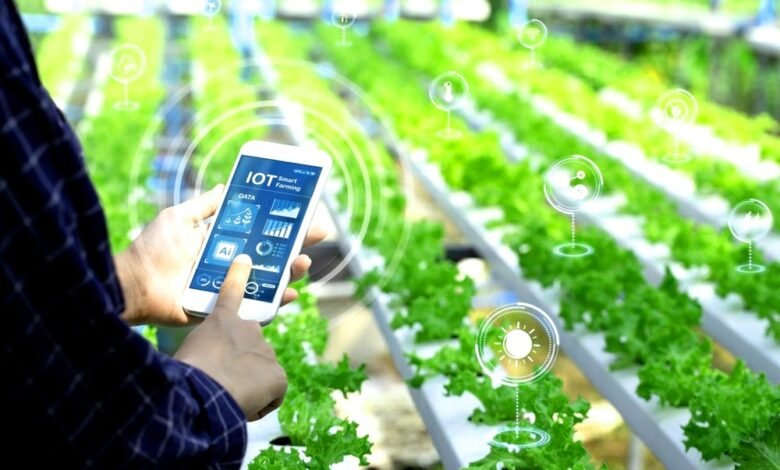
Germany’s Agricultural Internet of Things (IoT) industry continues to gain momentum as farmers and agribusinesses adopt smart technologies to enhance productivity and sustainability. The market reached USD 1.77 billion in 2024 and is projected to climb to USD 3.78 billion by 2032, registering a robust CAGR of 9.9% between 2025 and 2032.
Recent Technology & Industry Developments in Germany
Germany is accelerating its transition toward smart, connected farming. Several key advancements highlight the sector’s rapid growth:
-
October 2025: The Federal Ministry of Food and Agriculture expanded financial incentives for AI-enabled precision farming—targeting improved crop yield and reduced water usage.
-
September 2025: Bosch and Siemens introduced advanced smart-sensor networks capable of real-time soil, climate, and crop-stress monitoring.
-
August 2025: Deutsche Telekom rolled out Phase II of its rural 5G expansion, supporting autonomous tractors, connected drones, and next-gen irrigation solutions.
-
July 2025: John Deere collaborated with German agricultural cooperatives to deploy autonomous machinery and telematics-powered farm management tools.
-
June 2025: Multiple agritech startups secured new funding rounds to scale robotic harvesting systems and IoT-driven livestock health-monitoring solutions.
-


Leading Companies in the Market
Prominent players shaping Germany’s Agri-IoT landscape include:
Janz Tec AG, Bayer AG, Quectel, CLAAS KGaA mbH, John Deere, BASF Agricultural Solutions, AGCO GmbH, Nordic Semiconductor, Raven Industries, and Allflex Group Germany GmbH.
Market Growth Drivers: Strong Government Support & Digital Farming Policies
Germany’s push for agricultural digitalization is a major catalyst for IoT adoption. Initiatives such as Digital Farming 2025, backed by a €150 million investment, aim to accelerate AI, robotics, automation, smart irrigation, and precision-machinery deployment.
Funding for rural 5G infrastructure further enhances the country’s readiness for real-time data analytics, autonomous equipment, and sustainable resource management.
Key Restraint: Connectivity Challenges in Rural Areas
Despite rapid advancements, internet connectivity continues to limit widespread IoT adoption.
A Bitkom-DLG study reveals that 51% of German farmers struggle with poor network access, which disrupts real-time farm monitoring, remote automation, and data-driven decision-making. This remains one of the key barriers to achieving full digital transformation across the agricultural sector.
Market Outlook: 2025–2032
The Germany Agricultural IoT Market is expected to demonstrate strong, consistent growth through 2032. Technological innovation, government initiatives, and strategic collaborations among key industry players are likely to accelerate adoption across farms of all sizes. As smart farming becomes mainstream, the market will continue expanding steadily over the forecast horizon.
Research Methodology Overview
The market insights are based on an extensive blend of primary and secondary research. Analysts evaluated:
-
Government regulations and policy frameworks
-
Competitive landscape and market shares
-
Technological advancements and emerging innovations
-
Historic market performance
-
Risks, opportunities, and industry challenges
The study ensures a comprehensive, data-driven overview of Germany’s agricultural IoT ecosystem.
Market Segmentation
By Component
-
Hardware
-
Software
-
Services
By Deployment Model
-
Cloud-Based
-
On-Premises
-
Hybrid
By Farm Size
-
Small Farms (Below 5 Hectares)
-
Medium Farms (5–10 Hectares)
-
Large Farms (Above 10 Hectares)
By Application
-
Precision Farming
-
Livestock Monitoring
-
Precision Forestry
-
Smart Greenhouses
-
Others
By End User
-
Farmers
-
Agribusinesses
-
Other Stakeholders
Report Highlights
Chapter 1: Defines the market scope, segmentation, and expected growth across regions and product categories.
Chapter 2: Highlights major trends and transformational forces shaping the Agri-IoT industry.
Chapter 3: Reviews competitive strategies, revenue distributions, and recent mergers & acquisitions.
Chapter 4: Profiles key companies, including product portfolios, financial performance, and milestones.
Chapters 5–6: Analyze revenue patterns at regional and national levels, uncovering high-growth opportunities.
Chapter 7: Examines market potential by component type, helping readers identify profitable segments.
Chapter 8: Breaks down growth prospects by application, pinpointing promising end-use industries.
Chapter 9: Maps the supply chain, assessing upstream and downstream activities.
Chapter 10: Summarizes key takeaways and strategic insights for decision-makers