IoT in Transportation & Logistics: The Ultimate Guide to Smarter, Safer Supply Chains
IoT in transportation and logistics, explained with real uses, costs, legal cases, and the ethical rules each fleet and supply chain team must follow.
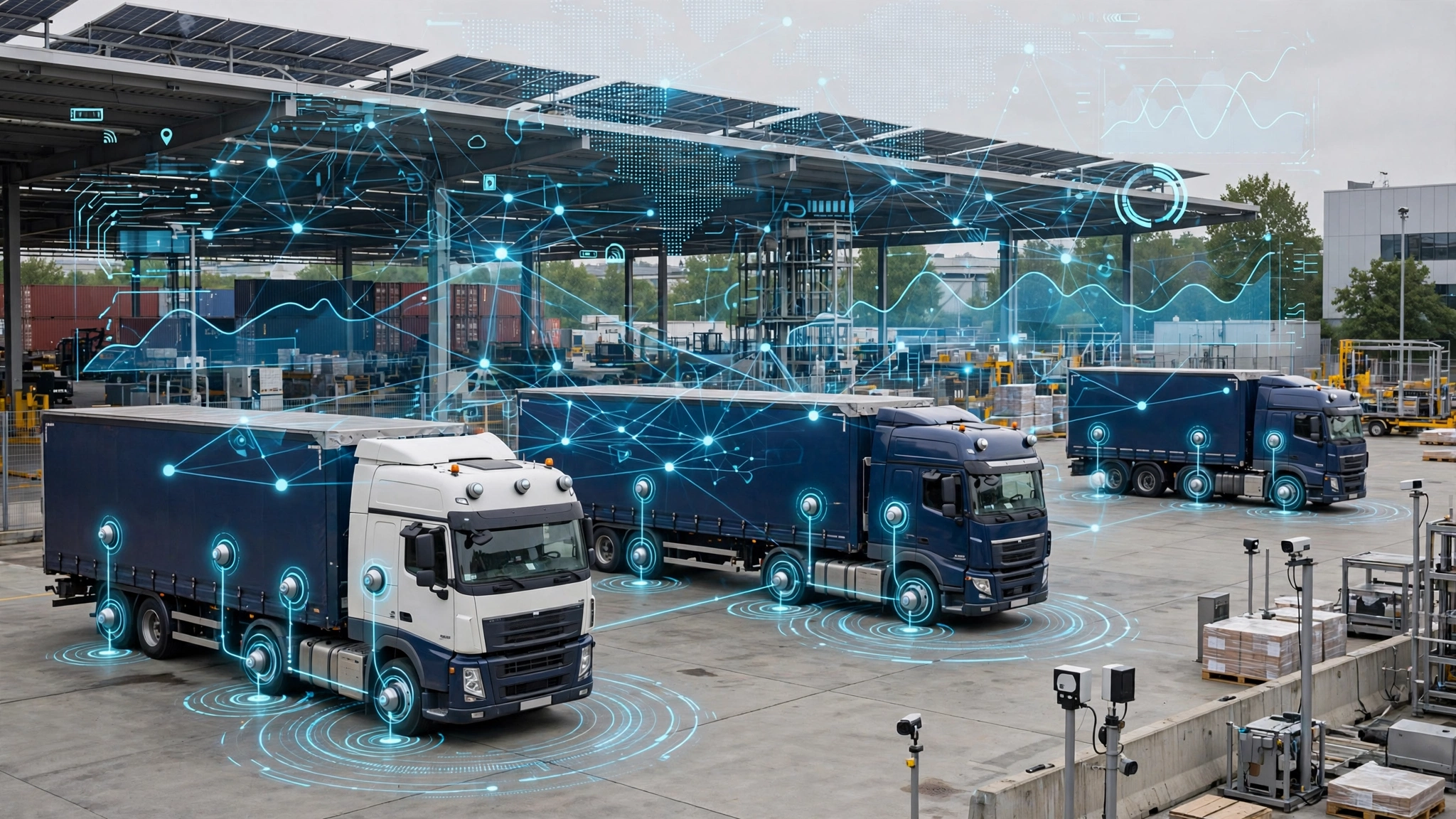
IoT in transportation and logistics has moved from pilot projects to the backbone of how goods move. A refrigerated trailer now reports its own temperature. A container ship streams engine data to a shore team. A delivery van tells its dispatcher it needs new brakes before the brakes actually fail.
None of this feels futuristic anymore, and that is exactly why it deserves a closer look. The money behind connected logistics is large and still growing, and every major research firm expects double-digit growth through the early 2030s.
What most guides skip is the uncomfortable part. The same sensors that cut fuel bills can be jammed, spoofed, hacked, or quietly turned against the workers they were meant to help. A New Jersey truck driver was fined after his GPS jammer disrupted a navigation system at Newark airport. A carmaker paid billions after its engine software was caught cheating emissions tests. A global shipping giant lost hundreds of millions of dollars to a single piece of malware.
This guide covers both sides. You will see how IoT in transportation and logistics actually works, where it pays off, what it costs, and which real cases show the risks. We also look at the ethical lines companies should not cross when they monitor vehicles, cargo, and people. If you manage a fleet, run a warehouse, lead a supply chain team, or just want to know where your parcel is right now, this one is written for you.
What Is IoT in Transportation and Logistics?
IoT in transportation and logistics means putting connected sensors on the things that move goods: trucks, trailers, containers, pallets, rail cars, aircraft, and warehouse equipment. Those sensors collect data and send it over a network to software that people (and increasingly, automated systems) use to make decisions.
The idea is simple. Instead of guessing where a shipment is or how a vehicle is doing, you know. Instead of reacting after a breakdown, you act before it happens.
How It Works: The Four Layers
Most systems for IoT in transportation and logistics follow the same basic structure, whatever the vendor calls it.


- Devices and sensors. GPS units, temperature probes, door sensors, accelerometers, fuel sensors, tire pressure monitors, and RFID tags. These sit on the vehicle or the cargo.
- Connectivity. Cellular networks (4G, 5G, LTE-M, NB-IoT), satellite links for ships and remote routes, and short-range options like Bluetooth or Wi-Fi inside warehouses.
- Cloud platforms. The data lands in a platform that stores it, cleans it, and connects it to other systems such as transport management or warehouse management software.
- Analytics and action. Dashboards, alerts, route optimization, and predictive models turn raw readings into decisions. A driver gets rerouted. A mechanic gets a work order. A customer gets an accurate delivery window.
Core Technologies Behind Connected Logistics
A few technologies do most of the heavy lifting:
- Telematics combines GPS with vehicle diagnostics, so fleet managers see location, speed, idling, fuel use, and engine fault codes in one place.
- Electronic logging devices (ELDs) record driving hours automatically. In the United States and several other markets they are required by law to enforce hours-of-service rules.
- RFID and BLE tags identify pallets and parcels without line-of-sight scanning, which speeds up loading docks and inventory counts.
- Edge computing processes data on the device itself, which matters when a truck or ship loses signal.
- Digital twins create a virtual model of a fleet, port, or warehouse to test changes before making them in the real world.
Key Use Cases of IoT in Transportation and Logistics
The use cases below show up again and again in real deployments. Each one solves a specific, expensive problem.
Real-Time Tracking and Supply Chain Visibility
Real-time tracking is the starting point for most companies. GPS tracking on trucks and trackers on high-value cargo give shippers and customers a live view of every load. This improves supply chain visibility, cuts the number of “where is my order” calls, and helps teams react quickly when a shipment is delayed at a border or port.
Fleet Management and Predictive Maintenance
For trucking and delivery companies, fleet management is where the return on investment is easiest to see. Sensors track engine temperature, oil pressure, brake wear, and battery health. Predictive maintenance models flag parts that are likely to fail, so repairs happen during planned downtime instead of on the side of a highway. Fewer breakdowns mean fewer missed deliveries and safer roads.
Cold Chain Monitoring
Food, vaccines, and many medicines must stay within tight temperature ranges. Cold chain monitoring uses temperature and humidity sensors that report continuously and trigger alerts the moment a reading drifts. Shipping lines now monitor refrigerated containers remotely across oceans, which used to be impossible. For pharmaceutical shippers, these records also serve as proof of compliance for regulators.
Smart Warehouses
Inside the building, smart warehouses use connected scanners, RFID gates, autonomous mobile robots, and environmental sensors. Managers can see where every pallet sits, how fast pickers are working, and which docks are free. The result is faster turnaround and fewer lost items.
Ports, Rail, and Air Freight
IoT in transportation and logistics reaches well beyond roads. Ports use sensors on cranes and gates to cut truck waiting times. Rail operators monitor wheel bearings and track conditions to prevent derailments. Air cargo companies track unit load devices and temperature-sensitive goods from runway to warehouse. Market research firm IMARC identifies rail as the leading segment in transport IoT because of how heavily it relies on sensors for safety and operations.
Benefits of IoT in Transportation and Logistics
The case for IoT in transportation and logistics rests on a handful of concrete gains. None of them are magic, and all of them depend on good data and people who act on it.
- Lower fuel costs. Telematics data exposes idling, speeding, and inefficient routes. Fuel is one of the biggest costs in trucking, so even small cuts add up fast.
- Less downtime. Predictive maintenance catches problems early and turns emergency repairs into scheduled ones.
- Safer driving. Harsh braking, speeding, and fatigue alerts help coach drivers and reduce accidents.
- Less spoilage and waste. Continuous cold chain monitoring catches temperature problems while there is still time to save the load.
- Better customer experience. Accurate arrival times and live tracking links have become a baseline expectation, not a bonus.
- Easier compliance. Automated logs for driving hours, temperature, and emissions make audits faster and cheaper.
- Theft recovery. Covert trackers on high-value cargo help police locate stolen trailers, often within hours.
Real-World Examples of Connected Logistics
A few well-known deployments show what this looks like at scale:
- Maersk Remote Container Management. The shipping line equipped its refrigerated containers with connected devices, so customers can see temperature, humidity, and location during ocean voyages instead of waiting until arrival to find out if cargo spoiled.
- UPS route optimization. UPS combined vehicle telematics with its ORION routing system. The company has said the program saves tens of millions of miles and millions of gallons of fuel each year.
- Rail condition monitoring. Freight railroads use trackside sensors that measure wheel and bearing temperatures as trains pass, flagging overheating parts before they cause a derailment.
Market Size and Growth
The market for IoT in transportation and logistics is big, but be careful with any single number. Research firms define it differently, so estimates for the same year can differ by tens of billions of dollars.
| Source | Scope | 2025 value | Forecast |
|---|---|---|---|
| IMARC Group | IoT in transportation | USD 194.5 billion | USD 706.6 billion by 2034 (14.95% CAGR) |
| Intel Market Research | IoT in transportation | USD 119 billion | USD 258 billion by 2034 (8.6% CAGR) |
The takeaway is direction, not precision. Every source points to steady double-digit or near double-digit growth, driven by cheaper sensors, wider 5G coverage, and pressure on fuel costs and driver availability.
Costs and Practical Challenges
Honest planning starts with the hard parts. Companies adopting IoT in transportation and logistics usually run into these:
- Upfront hardware and installation costs, especially across large or mixed fleets.
- Integration headaches when new platforms must talk to older transport and warehouse systems.
- Data overload. Thousands of alerts a day are useless if nobody owns the response.
- Patchy connectivity on rural routes, at sea, and across borders.
- Security and privacy risk, which the next section covers in detail because it is where things go seriously wrong.
The Dark Side of IoT in Transportation and Logistics: Real Illegal Cases
Every connected device is also a target, and every tracking system creates a temptation to cheat it. The cases below are not hypothetical. They show how IoT in transportation and logistics has been abused, attacked, and misused, and what it cost the people involved.
| Year | Case | What happened | Outcome |
|---|---|---|---|
| 2024 | Amazon France Logistique | Warehouse scanners used to monitor workers too closely | EUR 32 million fine from France’s data regulator (CNIL) |
| 2023 | Port of Nagoya, Japan | Ransomware hit the terminal system | Container operations halted for about two days |
| 2017 | Maersk (NotPetya) | Malware spread through company systems | Losses estimated at up to USD 300 million |
| 2017 | Volkswagen | Engine software cheated emissions tests | Guilty plea and USD 2.8 billion US criminal fine |
| 2013 | Newark airport GPS jammer | Truck driver jammed his employer’s tracker | FCC proposed a fine of USD 31,875 |
GPS Jamming: The Newark Airport Case
The most famous example started with one driver who did not want his boss to know where he was. Gary Bojczak, who drove a company pickup for a New Jersey construction materials firm, plugged a cheap GPS jammer into the truck to block its tracker.
The problem was where he drove. In 2012, his jammer interfered with a new satellite-based landing aid being tested at Newark Liberty International Airport, one of the busiest airports in the United States. Federal agents used direction-finding equipment to trace the signal to his truck. According to Inside GNSS, the FCC proposed a fine of $31,875 for operating an unlicensed device and interfering with authorized communications. He also lost his job. Nextgov reported that jammers had disrupted the same system since at least 2009, and that tracking down a single earlier jammer took authorities about two years.
The lesson for fleet operators is twofold. GPS jamming is illegal in the US and many other countries, even for personal use. And a driver who feels watched every minute has a motive to fight the system, which is a management problem as much as a technical one.
Cargo Theft Using Jammers and Fake Carriers
Organized cargo theft crews have learned to beat trackers. Some carry jammers to blind GPS units on a trailer before they hook it up and drive away. Others skip the hardware entirely and use identity fraud, posing as legitimate carriers on load boards to book shipments that simply never arrive. Industry groups describe this “strategic theft” as one of the fastest-growing threats to shippers. The fix is layered security: backup trackers that use different signals, jamming detection alerts, and carrier vetting.
Electronic Logging Device Tampering
ELDs exist to keep exhausted drivers off the road. Yet some carriers and drivers have tried to edit logs, use devices that do not meet certification rules, or run unplugged to hide extra driving hours. Regulators treat falsified logs as a serious violation because fatigue is a leading factor in truck crashes. Penalties can include fines, out-of-service orders, and in serious cases criminal charges against company officials.
Software Defeat Devices: The Volkswagen Lesson
The Volkswagen emissions scandal is the clearest example of a company turning vehicle software against regulators. Engine code detected when a car was being tested and switched to a cleaner mode, then polluted far more on real roads. Around 11 million vehicles worldwide carried the software. Volkswagen pleaded guilty in the US in 2017 and agreed to a $2.8 billion criminal fine, alongside much larger civil settlements. It was not a logistics company, but the lesson applies to every connected fleet: data that is checked by machines can be faked by machines.
Cyberattacks on Shipping and Ports
Connected logistics also widens the attack surface for criminals. In 2017, the NotPetya malware tore through Maersk’s systems and forced the world’s largest container line to rebuild much of its IT network. The company estimated the damage at up to $300 million. In July 2023, a ransomware attack linked to the LockBit group shut down the container terminal system at the Port of Nagoya, Japan’s busiest port, for roughly two days.
These attacks did not need to touch a single truck sensor. They hit the platforms where IoT security and IT security meet, which is exactly where many logistics companies are weakest.
Worker Surveillance That Crosses the Line
Not every abuse comes from outsiders. In January 2024, France’s data protection authority, CNIL, fined Amazon France Logistique 32 million euros. The regulator found that the scanners used by warehouse workers tracked their activity in excessive detail, including measuring short idle periods, and that this monitoring went beyond what European data privacy law allows. The scanners were legitimate logistics tools. The way the data was used was not.
How to Implement IoT in Transportation and Logistics Ethically
The cases above share a pattern. Either the data was used for something people never agreed to, or security was an afterthought. A responsible rollout of IoT in transportation and logistics fixes both from day one.
- Tell people what you track and why. Drivers and warehouse staff should know which data is collected, who sees it, and how it is used. Secret monitoring breeds distrust and, as Newark showed, active resistance.
- Collect only what you need. Track the vehicle during work hours, not the driver’s personal life. Avoid second-by-second productivity scoring unless there is a clear, lawful reason.
- Use data to coach, not to punish. Safety alerts work best when they lead to training and support rather than automatic penalties.
- Secure every layer. Change default passwords, encrypt data in transit, patch firmware, segment networks, and test incident response plans before you need them.
- Plan for jamming and spoofing. Use trackers with backup signals and alerts that fire when GPS suddenly goes dark.
- Follow the law where you operate. GDPR in Europe, state privacy laws in the US, and local labor rules all limit employee monitoring. ELD and radio rules also vary by country.
- Vet your vendors. Ask how long devices receive security updates, where data is stored, and who can access it.
The Future of IoT in Transportation and Logistics
The next few years will push connected logistics further in a few clear directions:
- 5G and satellite IoT will close coverage gaps at sea, on rural highways, and across remote rail lines.
- AI-driven analytics will move from flagging problems to recommending and even executing fixes, such as automatic rerouting.
- Electric fleets will lean heavily on IoT for battery health, charging schedules, and range planning.
- Autonomous trucks and yard vehicles will depend on dense sensor networks and reliable positioning, which makes anti-jamming protection even more important.
- Stricter regulation of connected devices and worker data is coming, so companies that build privacy and security in now will spend less catching up later.
Conclusion
IoT in transportation and logistics has already changed how goods move, giving companies real-time tracking, predictive maintenance, cold chain monitoring, and smarter warehouses that cut costs and improve safety, while market forecasts point to steady growth through the next decade. The same technology also carries real risk, as the Newark GPS jammer fine, Volkswagen’s defeat device, the Maersk and Nagoya cyberattacks, and the CNIL fine against Amazon France Logistique all show. The companies that win with IoT in transportation and logistics will be the ones that treat transparency, data minimization, and strong security as part of the system itself, not as extras added after something goes wrong.