10 Key Digital Solutions in Smart Cities That Are Powerfully Transforming Urban Life
Discover the 10 key digital solutions in smart cities reshaping urban life—from IoT and AI to smart grids, digital twins, e-governance, and 5G connectivity.
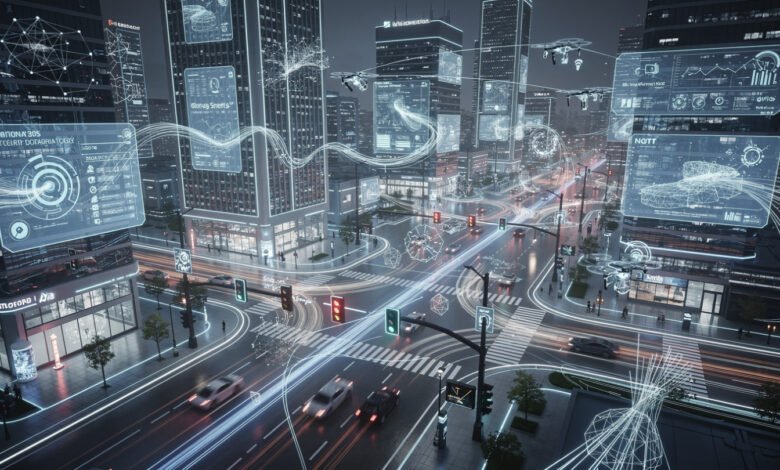
Digital solutions in smart cities are no longer a futuristic concept. They are actively reshaping how millions of people live, commute, pay bills, breathe, and stay safe every single day. From Barcelona’s sensor-driven streetlights to Dubai’s fully paperless government, cities around the world are betting big on technology to manage the pressure of rapid urbanization.
By 2050, nearly 70% of the world’s population will live in urban areas. That kind of growth puts enormous strain on infrastructure, public services, transportation, and natural resources. Traditional systems simply cannot keep up. That’s where smart city technology steps in, turning raw data into better decisions and disconnected systems into coordinated, efficient networks.
The global smart city market was valued at approximately $550 billion in 2024 and is projected to reach $1.5 to $2 trillion by 2030, growing at a compound annual rate of 20–25%. The numbers alone tell you how seriously governments and the private sector are taking urban digital transformation.
This article breaks down the 10 key digital solutions in smart cities that are driving real, measurable change right now. Whether you’re a policy maker, urban planner, tech enthusiast, or simply a curious city dweller, understanding these solutions will help you see the city around you in a completely different light.
1. IoT Networks: The Nervous System of a Smart City
When people talk about digital solutions in smart cities, the Internet of Things (IoT) almost always comes first, and for good reason. IoT is the connective tissue that links sensors, devices, vehicles, buildings, and infrastructure into a single, responsive network.
Think of it this way: a city without IoT is like a body without nerves. Signals don’t travel, problems go undetected, and decisions get made on outdated information.
How IoT Works in Urban Environments
In a smart city, IoT devices collect real-time data from thousands of points simultaneously, including traffic intersections, parking lots, river levels, air quality monitors, and utility meters. This data streams into centralized platforms where it’s analyzed and acted upon, often automatically.


By 2025, projections estimated around 75 billion connected IoT devices worldwide. A significant share of those devices live inside cities. Connected infrastructure built on IoT allows cities to:
- Monitor and adjust traffic signals based on live congestion data
- Detect water leaks in pipelines before they become expensive failures
- Track energy consumption at the building level in real time
- Send automatic alerts when waste bins reach capacity
Barcelona is one of the most cited examples. The city embedded IoT sensors in its streets, parks, and parking systems, reducing water usage in urban gardens by 25% and cutting parking search time significantly. New York City uses IoT cameras and connected devices to run adaptive traffic signals and pilot connected vehicle programs.
IoT doesn’t work in isolation, though. Its real power comes when it’s paired with artificial intelligence, which brings us to the next solution.
2. Artificial Intelligence and Predictive Analytics
Artificial intelligence (AI) transforms IoT data from a flood of raw numbers into something actually useful: decisions. Without AI, cities would be drowning in data they couldn’t act on. With it, they can anticipate problems before they happen, allocate resources more efficiently, and deliver services that feel almost tailored to individual needs.
AI in Urban Planning and Operations
AI in urban planning is helping city departments move from reactive to proactive management. Pittsburgh’s AI-powered SURTRAC traffic system is a great real-world example. It reduced travel times by over 25%, cut wait times by up to 40%, and lowered vehicle emissions by 20% during its pilot phase.
Beyond traffic, predictive analytics is being used across:
- Public safety: Identifying areas at higher risk of crime before incidents occur
- Infrastructure maintenance: Predicting when roads, bridges, or pipes are likely to fail
- Energy management: Forecasting demand spikes and adjusting supply accordingly
- Healthcare: Analyzing population health trends to position emergency services more effectively
The McKinsey Global Institute estimates that smart city applications of AI could improve key quality-of-life metrics by 10–30%, covering everything from commute times to healthcare outcomes to crime rates.
By 2030, AI’s contribution to the global economy is projected to reach $15.7 trillion. A meaningful portion of that value will come from smart city applications.
3. Smart Mobility and Intelligent Transportation Systems
Traffic congestion costs cities billions every year in lost productivity, wasted fuel, and pollution. Smart mobility is the answer, and it’s one of the fastest-growing segments within digital solutions in smart cities.
The global urban mobility market grew from $153.92 billion in 2024 to $167.04 billion in 2025, and it’s expected to hit $250.56 billion by 2030. That growth is driven by demand for smarter, cleaner, more connected ways to move people and goods around cities.
What Smart Mobility Actually Includes
Intelligent transportation systems (ITS) cover a wide range of technologies:
- Real-time traffic management: Dynamic signal control systems that adapt to live congestion patterns
- Mobility-as-a-Service (MaaS): Apps that unify public transit, ride-share, and micromobility into a single platform. Helsinki’s Whim service is a standout example, with 38% of users reducing daily car trips after adopting it
- Electric vehicle (EV) infrastructure: Smart charging networks that balance grid load and guide drivers to available stations
- Autonomous vehicles: Dubai has already deployed driverless taxis as part of its smart city strategy
- Multimodal integration: Connecting buses, bikes, trains, and shared vehicles so riders can plan seamless door-to-door journeys
Smart mobility does more than reduce congestion. It improves air quality, increases transit equity, and makes cities more accessible for elderly and disabled residents.
4. Digital Twin Technology
A digital twin is a virtual, real-time replica of a physical city. It’s one of the most powerful and underappreciated digital solutions in smart cities today.
Urban planners can use a digital twin to simulate how a proposed road change will affect traffic flow across the entire city, test a new water management policy without touching a single pipe, or model how a heat wave will impact energy demand block by block. All of this happens before any real-world action is taken.
Practical Applications of Digital Twins
- Infrastructure planning: Modeling population growth and its impact on roads, sewers, and utilities
- Climate resilience: Simulating how flooding or extreme heat would affect specific neighborhoods
- Energy optimization: Testing different grid configurations to find the most efficient setup
- Emergency response: Running disaster scenarios to identify vulnerabilities before a real crisis hits
Singapore has one of the world’s most advanced digital twin deployments, called the Virtual Singapore platform. It gives planners a highly detailed 3D model of the entire city-state, down to individual buildings and underground infrastructure. This kind of tool makes data-driven urban decisions far more precise than they’ve ever been.
5. Smart Energy Grids and Renewable Integration
Energy is the backbone of any functioning city. Smart energy grids are modernizing the way cities produce, store, and distribute power, and they’re a critical part of the urban digital transformation push toward sustainability.
Traditional power grids were built for one-way energy flow: from a central plant to consumers. Smart grids work both ways. They can absorb energy from rooftop solar panels, battery storage systems, and wind turbines, then redistribute it dynamically based on real-time demand.
Key Features of Smart Energy Grids
- Automated demand response: Reducing consumption during peak periods without manual intervention
- Renewable energy integration: Seamlessly adding solar, wind, and hydropower into the grid
- Decentralized generation: Enabling community solar projects and microgrids that make neighborhoods energy-resilient
- Real-time monitoring: Detecting faults and outages within seconds rather than hours
Masdar City in the UAE runs almost entirely on clean energy from solar farms and wind turbines, with buildings that consume significantly less energy than conventional structures. Amsterdam has over 4,800 EV charging stations integrated with a smart grid that balances load across the city.
The smart energy segment was worth approximately $100 billion in 2024, and demand is only going up as cities set increasingly ambitious carbon reduction targets.
6. E-Governance and Digital Public Services
Government services have historically been slow, paper-heavy, and frustrating. E-governance is changing that. It’s one of the most citizen-facing digital solutions in smart cities, and when it’s done well, it has a massive impact on daily life.
In 2024, Dubai became the first city in the world to go completely paperless for all government services. Everything from paying utility bills to booking medical appointments to renewing a driving license happens through the Digital Dubai platform. The city reportedly saved over 300 million printed pages and 14 million hours of admin time in that year alone.
What E-Governance Looks Like in Practice
Digital public services can include:
- Centralized city apps that give residents access to all government services in one place
- Open data platforms where researchers, startups, and citizens can access municipal data
- Online permit and licensing systems that replace physical queues
- Virtual public consultations that let citizens weigh in on infrastructure projects from home
- Participatory budgeting tools that involve communities in spending decisions
London’s Datastore offers over 700 public datasets, which have powered more than 700 separate travel and mobility apps. Singapore’s Smart Nation 2.0 program, launched in 2024, focuses specifically on making digital services more inclusive for elderly residents.
Blockchain technology is also making inroads in e-governance, enabling secure, transparent digital voting, identity verification, and even contract management.
7. Smart Public Safety and Surveillance Systems
Public safety in smart cities has evolved well beyond traditional CCTV. Modern systems combine AI, predictive analytics, connected sensors, and emergency response networks to keep urban populations safer while using far fewer resources.
Cities like Singapore have achieved a 20% reduction in traffic delays partly through smart-routing and AI surveillance. Seoul has deployed an extensive network of connected cameras and environmental sensors that feed into a centralized command center.
Technologies Powering Smart Public Safety
- AI-powered video analytics: Systems like MarshallAI process live surveillance feeds to automatically detect incidents, fights, vandalism, or hazardous objects and alert authorities instantly
- Predictive crime mapping: Algorithms that analyze historical crime data, weather, events, and social indicators to flag high-risk locations before incidents occur
- Gunshot detection systems: Acoustic sensors that pinpoint the location of gunfire within seconds
- Emergency drone response: Startups like Brinc Drones are deploying first-response drones for fire, search and rescue, and defense scenarios
- Body-worn cameras: Studies show that police body camera adoption reduced use-of-force incidents by approximately 10% and complaints against officers by 17%
- Real-time emergency vehicle tracking: Coordinating ambulances, fire trucks, and police through live traffic systems to minimize response times
There’s an important balance to strike here. Smart surveillance raises legitimate privacy concerns, and cities must pair these tools with strong data governance frameworks and clear legal oversight.
8. Smart Waste and Water Management
Resource management sits at the heart of any sustainable city. Smart waste management and smart water systems are two of the most cost-effective digital solutions in smart cities, delivering measurable savings and environmental benefits relatively quickly.
The global smart waste management market grew from $2.73 billion in 2024 to an estimated $3.17 billion in 2025, with a projected CAGR of 16% through 2035.
Smart Waste Management
Traditional waste collection follows fixed schedules regardless of whether bins are full or not. That wastes fuel, labor, and time. IoT-enabled fill-level sensors change the equation entirely.
- Sensors embedded in bins send real-time alerts when they near capacity
- Collection routes are dynamically adjusted based on actual need
- Cities using this approach have seen up to an 80% reduction in overflow incidents
Barcelona deployed IoT waste bins citywide and integrated them with centralized analytics to optimize collection routes and reduce unnecessary pickups.
Smart Water Systems
Water infrastructure in most cities is decades old and leaks constantly. Smart water systems use sensors and AI to:
- Detect leaks in real time before they become expensive emergencies
- Monitor water quality continuously across distribution networks
- Optimize irrigation in urban parks and green spaces
- Track consumption at the individual level to encourage conservation
9. 5G Connectivity and Edge Computing
All of the digital solutions in smart cities described above depend on fast, reliable, low-latency connectivity. 5G networks are what makes that possible at city scale.
The global 5G infrastructure market is growing at 22.9% annually and is expected to continue expanding through 2030. Mobile traffic alone is projected to reach 5,016 exabytes per month by 2030, a number that would simply overwhelm any previous network generation.
Why 5G Matters for Smart Cities
- Low latency: 5G can deliver response times below one millisecond, which is essential for autonomous vehicles and real-time emergency systems
- Massive device density: 5G can support far more connected devices per square kilometer than 4G, which is critical when a city has millions of sensors
- High bandwidth: Enables high-definition video surveillance, real-time digital twin updates, and seamless MaaS platforms
- Edge computing: Processing data closer to where it’s generated, rather than routing it through central servers. This reduces latency and allows faster local decisions
New York City is building dense sensor networks using connected cameras and IoT devices to support adaptive signals and connected vehicle pilots. Italian startup Bellantenna is developing adaptive antenna systems that use beam steering and programmable hardware to improve 5G performance in high-density urban environments.
Looking further ahead, 6G networks are already in early trials, targeting user speeds of 1–10 Gb/s and sub-millisecond latency, with potential to connect ground and satellite nodes for services like autonomous transport and remote healthcare.
The ITU (International Telecommunication Union) tracks global digital connectivity trends, and their data consistently points to 5G as the foundational infrastructure for the next generation of smart city applications.
10. Cybersecurity and Data Privacy Frameworks
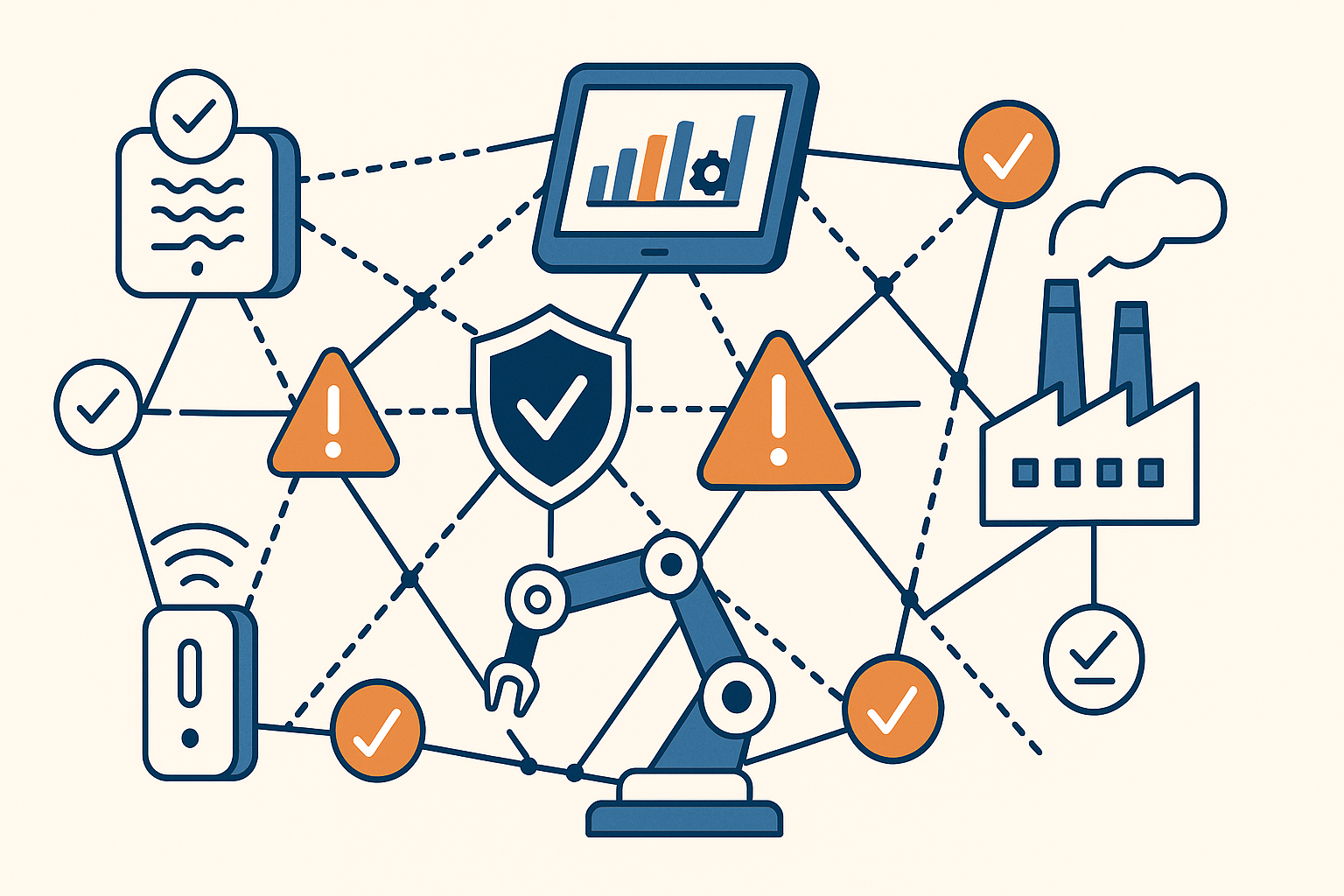
Every connected system is also an attack surface. As cities deploy more digital solutions, they collect more data, run more automated systems, and open more entry points for cyberattacks. Cybersecurity isn’t a nice-to-have for smart cities. It’s a non-negotiable foundation.
A successful cyberattack on a smart city’s water treatment plant, traffic management system, or hospital network isn’t just an IT problem. It’s a public safety crisis.
Building Cyber Resilience Into Smart City Infrastructure
- Zero-trust security architecture: Every user and device must be authenticated before accessing any system, regardless of location
- End-to-end data encryption: Protecting data in transit and at rest across all city systems
- Threat detection and response: AI-powered security operations centers that monitor for anomalies 24/7
- Blockchain for data integrity: Ensuring that records, transactions, and public data cannot be tampered with
- Digital ethics frameworks: Establishing clear policies on data ownership, citizen consent, and surveillance limits
- Regular penetration testing: Proactively identifying vulnerabilities before attackers do
The ITU reported in 2024 that while internet penetration is high in many developed nations, significant disparities remain, particularly around digital inclusion and cybersecurity readiness. Singapore ranks in the global top 5 for both, largely due to decades of deliberate investment in its digital governance framework.
Cities must also address the digital divide. If smart city benefits are only accessible to tech-savvy residents with fast internet, they fail at their most basic purpose: improving quality of life for everyone.
Conclusion
The 10 key digital solutions in smart cities covered in this article represent a fundamental shift in how urban environments operate. From the sensor-rich IoT networks that collect real-time urban data, to AI that turns that data into intelligent decisions, to 5G that connects everything at scale, these technologies are not independent tools but an interconnected ecosystem. Smart mobility, digital twin technology, e-governance, smart energy grids, public safety systems, smart waste and water management, and robust cybersecurity frameworks together form the blueprint of a truly modern city. Cities like Singapore, Dubai, Barcelona, and Oslo are already demonstrating what’s possible when investment, policy, and innovation align. As urban digital transformation continues to accelerate, the cities that embrace these solutions thoughtfully and inclusively won’t just be smarter. They’ll be more livable, more equitable, and better prepared for whatever comes next.